


Trade, Ruptures and the Art of the Deal: What the Future of Canada-U.S. Relations Means for CPAs
June 18, 2026
For Canadian businesses, few questions matter more right now than the future of Canada’s trading relationship with the United States. The consensus that governed North American trade for three decades is under pressure; the Canada-United States-Mexico Agreement (CUSMA, also known as USMCA or T-Mec) heads into its first mandatory review on July 1.
As Carol Wilding, FCPA, FCA, ICD.D., President and CEO of CPA Ontario, put it: “What is the future of our relationship with the superpower to the south? What are the trade-offs that Canada should be willing to accept in that relationship?”
The CUSMA review arrives at a time when sector specific Section 232 tariffs on steel, aluminium, copper, and softwood lumber are already straining key Canadian industries. The range of possible outcomes could reshape North American trade for years to come, which is why CPA Ontario recently invited two of the country’s most astute observers of politics and international trade to our Insights Speakers Series stage to share their perspectives on the current state of play in the negotiations.
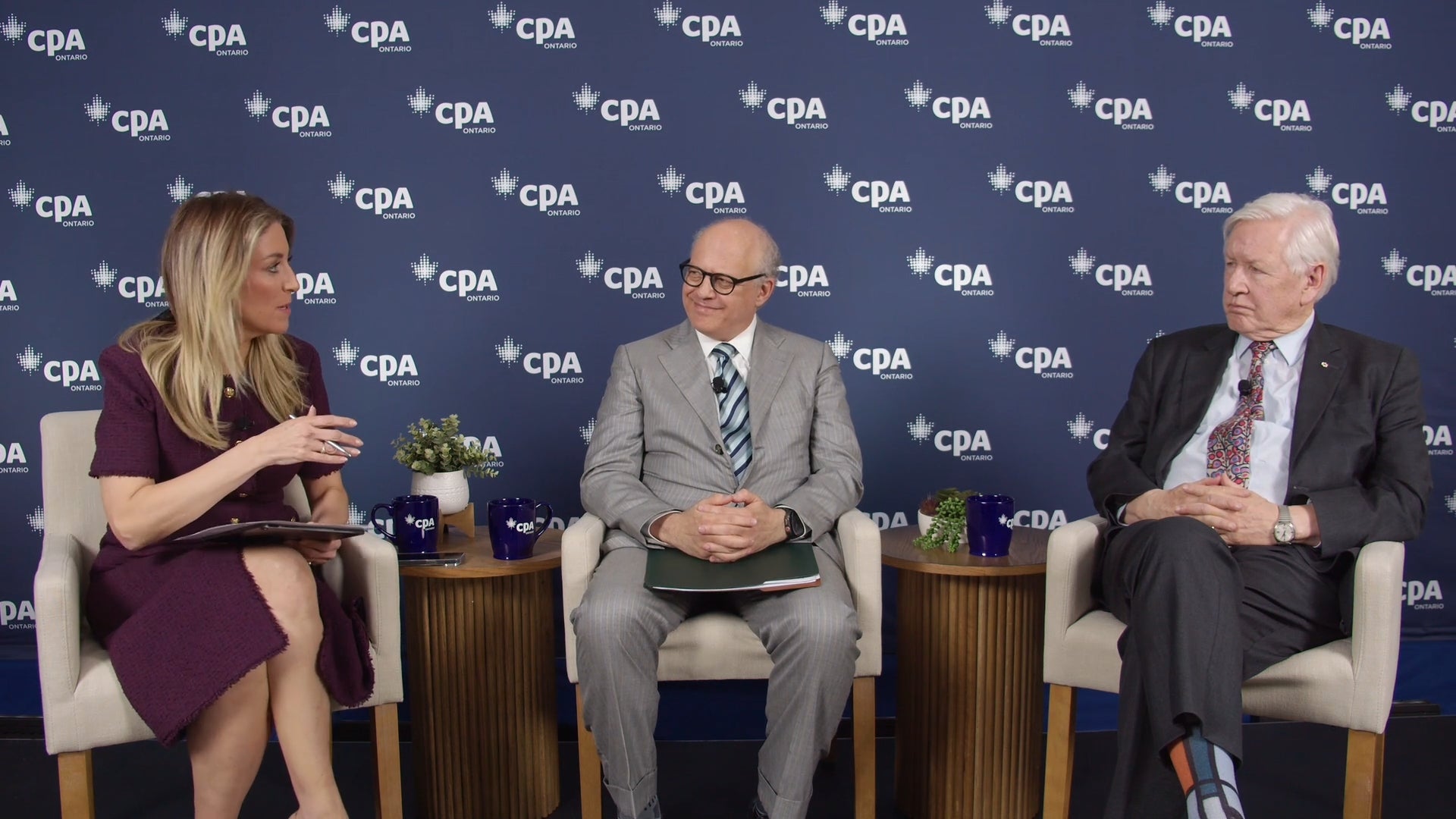
The Honourable Bob Rae, former Premier of Ontario, former interim Leader of the Liberal Party of Canada and former Canadian Ambassador to the United Nations, was joined by Barry Appleton, a lawyer and expert in international trade, investment and the digital economy. The discussion was led by Vassy Kapelos, chief political correspondent at CTV News.
1. Beyond Tariffs: How the Canada-U.S. trade relationship has changed
Canada’s shifting relationship with the U.S. is about more than just tariffs. It’s about diverging views on the nature of international relations and the purpose of trade agreements.
“The Americans are looking at this like a corporate takeover, and it's a very different type of negotiation. It’s deeply transactional,” said Appleton. “We've always worked together to make a bigger pie, and I think we have to change that thinking.”
The price of certainty, Appleton argued, is no longer free. Access to the U.S. market now works like "an Uber with surge pricing, the Americans want to charge a premium for access to their markets, want Canada to pay in advance and then want it again, and again.
Rae did not downplay the deterioration in relations between the two countries or the challenges Canada faces trying to find common ground with its neighbour to the south. “This is the first time we've dealt with a government in the United States that does not respect our sovereignty, that does not respect our independence,” he said.
But he also expressed cautious optimism, arguing that businesses “on both sides of the border” want a trade deal and a “steady relationship that’s going to allow them to continue to do business together.”
2. Canada’s leverage in CUSMA negotiations
Canada may be the smaller economy at the table, but it’s not without cards to play. Appleton argued that Canada’s leverage is stronger now than at any point in the past three decades of trade negotiations thanks to the areas the U.S. cannot easily replace. “The U.S. is so energy-dependent on Canada in electricity and oil,” Appleton said. Canadian crude oil accounted for more than 60% of all U.S. crude oil imports in 2024 and Canada is a critical supplier of electricity, potash, and the critical minerals that underpin everything from defence systems to electric vehicles.
But leverage only matters if you’re willing to use it, and the panelists differed on how aggressively Canada should play its hand. Appleton favoured a tougher posture, while Rae cautioned against signalling desperation. “The worst thing you can do in negotiation is say ‘I have to get a deal right away.’ By doing that, you've given away a lot of cards,” said Rae. But he added that he believes a deal will ultimately materialize, because “…ultimately saner heads will prevail.”
What would a good trade deal look like for Canada? Appleton was blunt about the downsides of a bad deal: a tariff of 15% or higher, he warned, would create "permanent, irreversible damage to Canada" a threshold he said Canada "cannot accept."
3. Trade diversification for Canada: a long-term strategy, not a quick fix
Both panelists agreed that Canada must push to diversify its trading partners. But diversification will take time.
“Diversification is a great idea, but we should have started diversification 15 to 20 years ago,” said Appleton. “It’s like saying you need a tree for shade, but if you plant the seed today you don’t get shade today.” He praised the government's efforts to strike new trade deals but cautioned that deals alone are not enough. Businesses have to follow through, and that takes time. Canada built its economy around proximity to the American market and easy access. "The U.S. was easy. It was nearby. We could be kind of lazy," Appleton said. "That's how we got ourselves into trouble here."
Rae offered a broader perspective: “Our trade with the United States is a big part of our economy as a country, but it's not the only thing that's important. We have investments and trade with countries in every part of the world.”
But Rae also argued that diversification isn't just about finding new foreign markets. Strengthening Canada's internal market matters too. "Trade barriers internally continue to be bad. Non-tariff barriers continue to be bad," he said, adding that new infrastructure investment and efforts to reduce interprovincial barriers are essential complements to any international trade strategy.
4. What the CUSMA review means for CPAs and Canadian businesses
Whatever happens in the July review of CUSMA, the panelists agreed that CPAs will be on the front lines of helping businesses navigate the outcome. Appleton called CPAs “the trusted advisors that people go to first” and “first responders” when uncertainty hits.
Appleton offered concrete steps that CPAs can take right now: conduct an audit of clients’ trade exposure; review compliance with the existing agreement to minimize the impact of current Section 232 tariffs; and look for ways to reduce the cost of moving goods across the border. He also urged CPAs to pay close attention to the digital economy. “Think about digital, because that’s where the economy is moving.”
Rae reinforced the point that planning for uncertainty doesn’t mean planning only for disaster. Canada has more free trade agreements in place than any other country in the world and efforts to reduce interprovincial trade barriers, invest in infrastructure and strengthen the domestic market all offer paths forward, regardless of what happens with CUSMA.
Both panelists agreed that while governments negotiate the framework, it’s businesses that ultimately make trade work. “Trade agreements are nice, but it’s businesses that make the deals.” said Appleton.